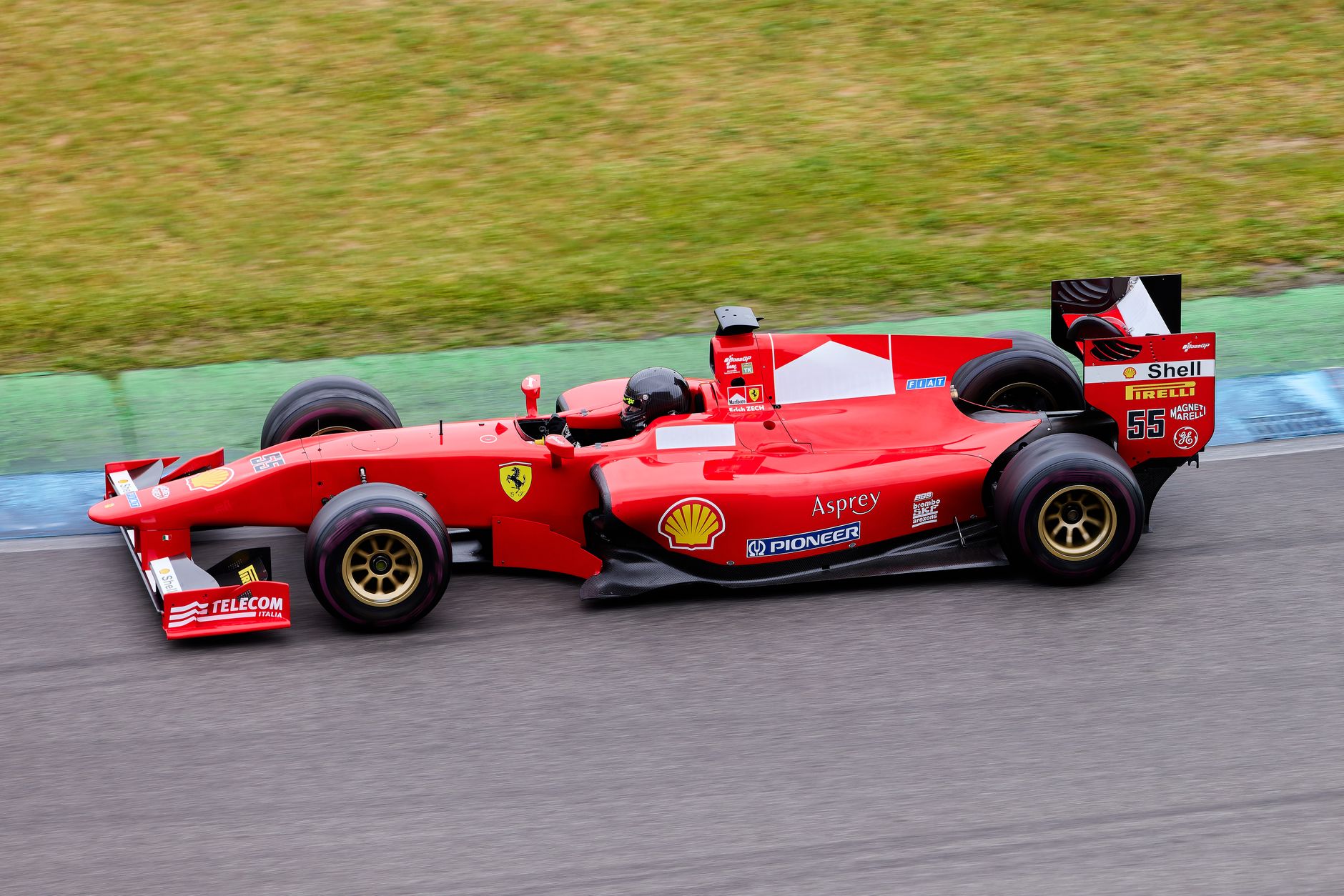
Formula 1 returns to Circuit de Barcelona-Catalunya from June 12 to 14 for Round 7 of the 2026 season.
The event is listed as the Formula 1 MSC Cruises Gran Premio de Barcelona-Catalunya 2026. It brings the championship back to one of its most familiar technical tests, a circuit teams know well and drivers still respect.
Barcelona has never been only another European race. For years, it was Formula 1’s preferred pre-season testing venue. That matters. Teams have huge banks of data here, and that often makes the competitive picture harder to hide.
The 2026 visit will run across a conventional three-day race weekend. Practice 1 is scheduled for Friday, June 12, from 11:30 to 12:30 track time. Practice 2 follows from 15:00 to 16:00.
Saturday begins with Practice 3 from 10:30 to 11:30. Qualifying then runs from 14:00 to 15:00 on June 13. The race is scheduled for Sunday, June 14, at 13:00 track time.
For Indian viewers, Barcelona’s June time zone usually places local Catalonia time three and a half hours behind IST. That means FP1 is expected around 15:00 IST, FP2 around 18:30 IST, FP3 around 14:00 IST, qualifying around 17:30 IST and the race around 16:30 IST, unless broadcasters list changes.
That is a friendly schedule for Indian fans. The race lands in the late afternoon, avoiding the very late nights that often come with flyaway rounds.
The Circuit de Barcelona-Catalunya is 4.657 km long. The Grand Prix distance is 66 laps, for a total race distance of 307.236 km. Oscar Piastri holds the listed fastest lap at the venue, a 1:15.743 from 2025.
The circuit first hosted Formula 1 in 1991. Its debut instantly became part of F1 folklore, thanks to Nigel Mansell and Ayrton Senna running side by side down the straight before Mansell went on to win.
The track itself was built as part of the development programme linked to the 1992 Barcelona Olympics. Its foundation stone was laid in 1989. The first car race came in 1991, with a Spanish Touring Car Championship round.
Two weeks later, Formula 1 arrived. More than three decades on, the venue remains one of the championship’s most useful measuring sticks.
Barcelona asks a very complete question of a Formula 1 car. It has slow corners, fast corners and long loaded sections where balance matters more than headline power. A car that works here usually has a sound aerodynamic base.
Turn 3 is the signature test. It is a long, fast right-hander where drivers lean heavily on downforce. Downforce is the aerodynamic load that pushes the car into the track, giving it grip at speed.
If the front of the car refuses to turn, the driver fights understeer. If the rear feels nervous, confidence disappears fast. At Barcelona, those weaknesses show up early.
That makes Friday especially important. Practice is not just about learning the circuit. It is where teams compare tyre wear, fuel loads and setup direction. On a track this well known, small differences can become very visible.
Tyre strategy will also matter because Barcelona puts sustained energy through the tyres. Long corners punish overheating. If a driver slides too much early in a stint, the tyre can fade before the planned pit stop window.
A pit stop window is the phase of the race where switching tyres makes strategic sense. Teams try to stop when the time lost in the pit lane is smaller than the performance gained on fresher rubber.
Barcelona has often rewarded clean execution over wild gambles. Track position matters because overtaking is not effortless. The clearest passing chance is into Turn 1, after the main straight.
That is why qualifying carries extra weight. Starting higher up the grid can protect a driver’s race before strategy even begins. A poor Saturday can force a team into riskier calls on Sunday.
For fans attending the race, the circuit offers several strong viewing points. Grandstand A, on the outside of Turn 1, gives sight of the main overtaking zone. That is where late braking moves usually happen.
The general admission area around Turn 3 offers a different kind of spectacle. Instead of pure overtaking, it shows the physical commitment of modern F1 machinery through a fast, loaded corner.
That contrast is part of Barcelona’s appeal. Turn 1 gives the obvious race action. Turn 3 reveals the car’s true grip and the driver’s trust in it.
The city’s appeal adds another layer. Barcelona brings food, culture and beaches into the Grand Prix weekend. For travelling fans, that makes it one of the easier European races to turn into a wider holiday.
For the championship, Round 7 arrives early enough to shape momentum but late enough for patterns to form. By mid-June, teams usually understand their car’s core strengths. They also know which weaknesses need urgent development.
That makes Barcelona a useful checkpoint. If a team claims it has found better balance, this is a place where that claim can be tested. If a driver says the car gives confidence in fast corners, Turn 3 will ask for proof.
The 2026 race also sits in an important technical context. Formula 1’s 2026 cars are part of a new rules era, and early-season development will be intense. Barcelona’s mix of corner speeds should expose how quickly teams are learning.
Fans should watch the gap between Practice 1 and Practice 2. If a team gains confidence across Friday, it may have found a setup direction. If it struggles in both sessions, Saturday could become damage limitation.
Qualifying will then compress the weekend into one hour. On a familiar track, the margins can be ruthless. Drivers cannot rely on others making basic mistakes.
Sunday’s race will likely reward tyre care, clean air and sharp pit timing. Clean air means running without another car directly ahead, which helps aerodynamic performance and tyre control.
Barcelona is not always chaotic, but it is rarely meaningless. It tells teams where they stand. It tells drivers how much trust they really have. And for fans, it offers one of the season’s clearest technical snapshots.
Round 7 now has its dates, its timetable and its stage. From June 12 to 14, Formula 1’s 2026 field returns to a circuit that has measured generations of cars, champions and title campaigns.


