Carlos Sainz and Fernando Alonso have built the clearest qualifying advantages over their team-mates in early 2026.
That is the bluntest takeaway from Formula 1’s current one-lap data. Some pairings are almost impossible to split. Others already show a clear direction.
Qualifying is still the cleanest public comparison between two drivers in the same car. Race pace depends on traffic, tyre life, safety cars and strategy calls. A single qualifying lap strips much of that away.
It does not remove every caveat. A yellow flag, a missed tyre window, a power unit issue or changing track conditions can distort the picture. But over time, qualifying head-to-heads reveal who is extracting speed when the car is light and the pressure is high.
The 2026 season gives each team-mate pairing up to 30 direct qualifying comparisons. That includes 24 grand prix qualifying sessions and six sprint qualifying sessions.
Right now, the data is still raw. Comparisons have only been discounted where one driver could not compete in qualifying. Outliers will need more context once the sample grows.
Even with that warning, some trends already matter.
Sainz Sets the Williams Benchmark
The strongest team-mate scoreline belongs to Carlos Sainz at Williams. He leads Alex Albon 6-0 in their qualifying head-to-head and holds an average advantage of 0.408s.
That is a serious gap in modern F1. Four tenths can be the difference between escaping Q1 and starting near the back. It can also decide whether a team gets clean air or spends Sunday trapped behind rivals.
Sainz built his reputation at Ferrari as a polished operator. He rarely looked wild over one lap, but he often delivered when grip peaked. At Williams, that quality appears to be translating quickly.
For Albon, the numbers are uncomfortable because he has usually been Williams’ reference point. He carried the team through difficult seasons and made a habit of dragging the car into better positions than expected.
This does not erase that record. It does show how demanding the Sainz benchmark has become.
Alonso Still Punishes Any Weakness
Fernando Alonso’s qualifying edge over Lance Stroll is even larger on average. Alonso leads 7-0 and is ahead by 0.549s across the usable comparisons.
Half a second is not a small internal gap. It can change the entire race plan before Sunday even begins.
If one car starts several rows ahead, that driver usually gets first access to better strategy options. They can choose cleaner air, react to undercuts and avoid early traffic. The other side of the garage has to recover ground.
Alonso’s qualifying strength has always been tied to precision. He is not only quick. He also tends to know when to risk everything and when to bank a lap.
That matters in a tightly packed midfield. A driver who regularly reaches Q2 or Q3 can change a team’s points ceiling.
Stroll’s challenge is simple in theory and hard in practice. He has to reduce the average gap first. The head-to-head score will only improve after that.
Ferrari’s Star Pairing Is Level, But Not Equal
Ferrari’s headline pairing remains finely balanced on paper. Charles Leclerc and Lewis Hamilton are tied 4-4 in qualifying.
The average gap still leans slightly toward Leclerc, by 0.037s. That is almost nothing across normal F1 timing screens.
It also fits the profile of both drivers. Leclerc has long been one of the grid’s most explosive qualifiers. Hamilton brings enormous experience and a record of adapting across eras, cars and tyre types.
A tie after eight comparisons suggests neither driver has taken control yet. But Ferrari will care about more than the scoreline.
They will study where the gaps appear. Is one driver stronger on street tracks? Does one warm the tyres faster? Does one deliver better first laps in Q3?
Those details shape set-up choices and race weekends. A 0.037s average gap tells fans the fight is close. Ferrari’s engineers will want to know why it is close.
McLaren Has the Tightest Elite Battle
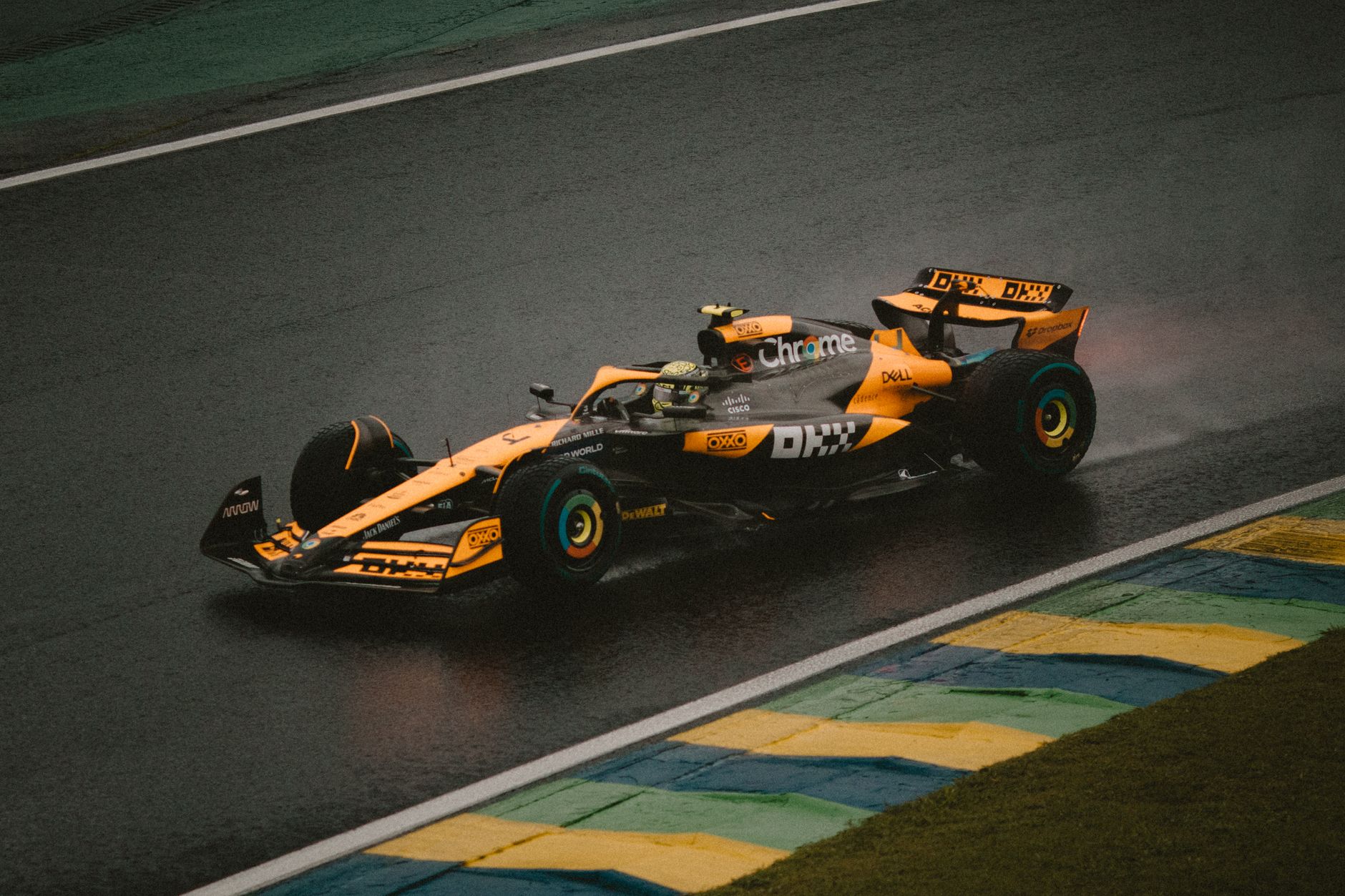
McLaren’s qualifying contest is also narrow. Lando Norris leads Oscar Piastri 5-3, with an average edge of just 0.036s.
That is effectively a coin toss over one lap. One small snap of oversteer can cover that margin. So can a slightly cleaner out-lap.
For McLaren, this is both a luxury and a management challenge. Two drivers operating within hundredths can maximise the car. They can also take points from each other if the team is fighting at the front.
Norris has the head-to-head lead. Piastri is close enough to keep internal pressure high every Saturday.
That matters because qualifying often sets the tone for McLaren’s race strategy. If both cars start near each other, the pit wall must handle undercuts and tyre priority carefully.
When drivers are this evenly matched, every Q3 lap carries political weight inside the garage.
Mercedes Gets a Surprise Statistical Twist
George Russell and Kimi Antonelli are tied 4-4 in their qualifying comparison. The average gap, though, favours Antonelli by 0.075s.
That is one of the more interesting numbers on the board.
Russell has built a strong identity as a top-class qualifier. He is clean, technical and usually fast at reaching a car’s limit. Antonelli matching him so early is significant.
The average advantage does not automatically mean Antonelli is ahead overall. Raw qualifying data can swing on one big session. It also needs context from weather, run plans and mechanical issues.
But for a young driver, being level with Russell in head-to-head terms is valuable. It gives Mercedes proof that its long-term bet has immediate pace.
For Russell, it sharpens the internal standard. He is not just leading a young team-mate through experience. He is fighting a genuine one-lap comparison.
Verstappen Keeps Red Bull Control
Max Verstappen leads Isack Hadjar 6-2 at Red Bull, with an average qualifying advantage of 0.335s.
That is a firm gap, though not as extreme as the Williams or Aston Martin numbers.
Verstappen’s qualifying strength is not always about dramatic margins. It is often about repeatability. He tends to deliver the lap when the session reaches its highest-pressure point.
For Hadjar, two qualifying wins against Verstappen already matter. Any driver alongside Verstappen faces one of the sport’s hardest measuring sticks.
The key for Hadjar is turning occasional wins into regular pressure. If the average gap stays above three tenths, Red Bull’s race options will usually flow through Verstappen first.
Bearman Leads Ocon at Haas
One of the more eye-catching early results sits at Haas. Ollie Bearman leads Esteban Ocon 6-2 and holds an average advantage of 0.167s.
That is a strong start for Bearman against a proven grand prix winner.
Ocon is usually resilient across a season. He can build weekends steadily and make races difficult for team-mates. But qualifying deficits are costly at Haas, where track position often decides whether points are realistic.
Bearman’s edge gives Haas a clear internal storyline. If he keeps placing the car higher on Saturdays, he can become the team’s main route into stronger race positions.
The Midfield Margins Tell Their Own Story
Audi’s early qualifying fight is closer. Nico Hulkenberg leads Gabriel Bortoleto 5-3, with an average edge of 0.066s.
That is a manageable gap for Bortoleto and a useful marker for Hulkenberg. The German has long been respected for qualifying pace, especially in midfield cars.
At Alpine, Pierre Gasly and Franco Colapinto are tied 4-4. Gasly leads on average by 0.139s.
That combination suggests volatility. Colapinto has found results, but Gasly has still held the stronger average. Alpine will need more sessions before that battle settles.
Racing Bulls has Liam Lawson ahead of Arvid Lindblad 4-3, with a 0.177s average advantage. That is competitive, though Lawson has the current upper hand.
Cadillac’s first qualifying comparison shows Sergio Perez ahead of Valtteri Bottas 5-2. Perez also leads by 0.176s on average.
For a new team, that internal order matters. Qualifying gives the engineers a reference point while they learn the car and build weekend routines.
The Data Will Get Tougher
These numbers are not final judgements. They are early signals.
A driver can look exposed in May and recover by mid-season. A new car concept can also suit one driving style before updates change its balance.
Still, qualifying gaps have consequences every weekend. They affect strategy priority, garage confidence, contract narratives and how fans judge momentum.
The tightest fights are at Ferrari, McLaren and Mercedes. The sharpest early gaps are at Aston Martin and Williams.
That mix gives the 2026 season a useful split. Some garages have genuine internal duels. Others already have a clear Saturday reference.
As the sample moves toward 30 sessions, excuses will fade. The stopwatch will keep doing what it always does in Formula 1.
It will make reputation answer to lap time.