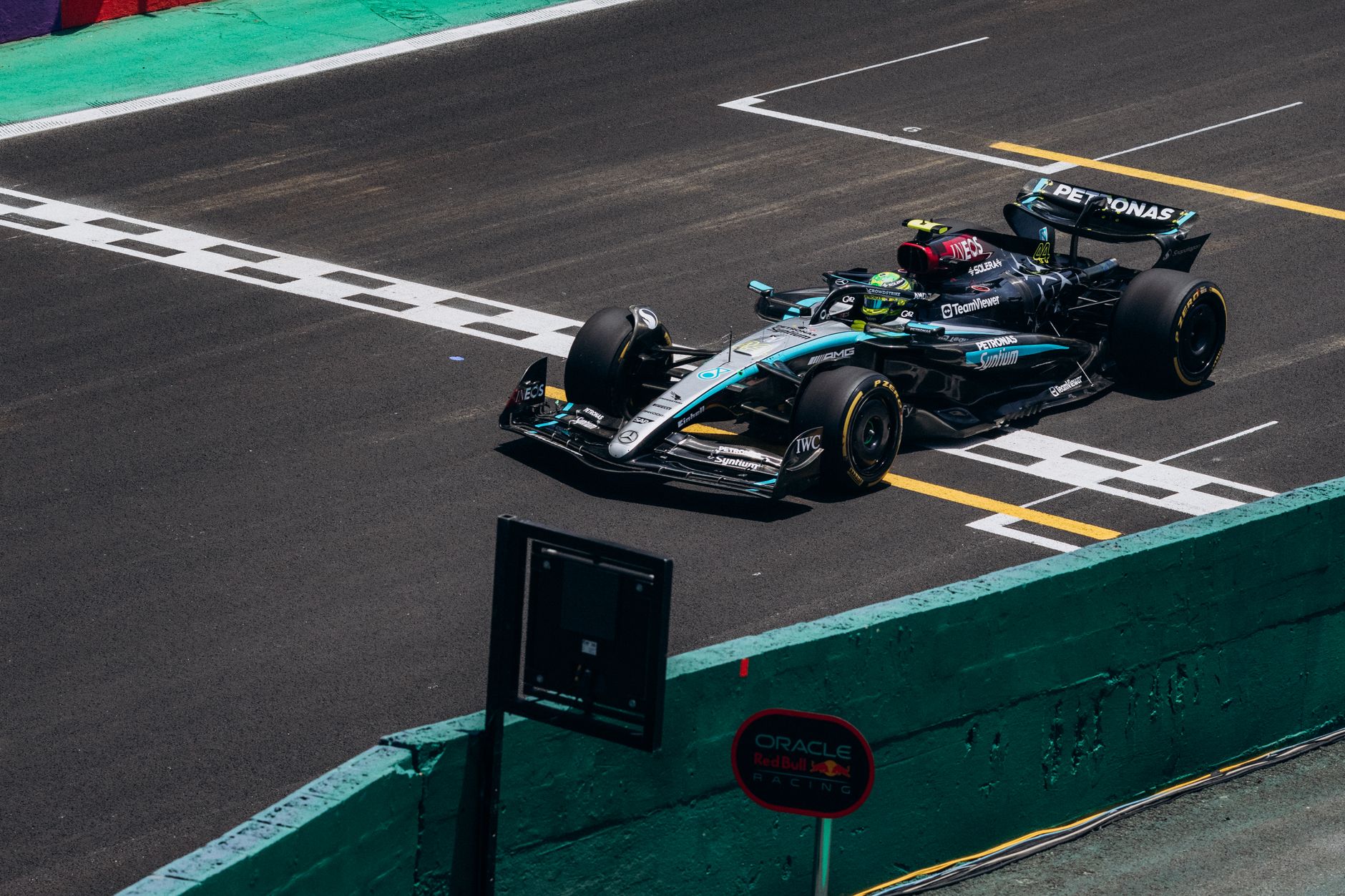
Arvid Lindblad gave Racing Bulls a clean reward from Canada’s Sprint by finishing eighth in Montreal and taking the final point on offer.
For a rookie, that is not a headline built on drama. It is built on execution. Lindblad started ninth, stayed close enough when the opportunity appeared, and brought the car home in the only place that still paid.
The Canadian Grand Prix Sprint was a 100km race, not a full Grand Prix. That changes the risk calculation. There is less time to recover from a slow start, a poor tyre phase, or a messy first lap. Only the top eight score, so Lindblad’s P8 was the cut-off between a useful Saturday and a nearly-there result.
Lindblad had already done the important groundwork on Friday. He reached the top-10 Sprint Qualifying segment, which put him ninth on the grid for Saturday’s short race. That track position mattered immediately.
He lined up just behind Isack Hadjar’s Red Bull. When Hadjar suffered a problem early in the Sprint, Lindblad moved into eighth. Hadjar later rejoined at the back, but the scoring chance had already opened.
From there, Lindblad’s job became simple but uncomfortable. He had to hold position. In a Sprint, that can be harder than it sounds. There are fewer laps for strategy to unfold, fewer tyre offsets to exploit, and little room for a slow rhythm.
Lindblad judged the race afterwards as the maximum realistic result. He said he had hoped a first-lap gain might be possible, but accepted that the Hadjar issue created the place instead. His key point was clear: he felt there was nothing more available from the car and race situation.
That matters for Racing Bulls. Midfield weekends often turn on small margins. A single Sprint point does not transform a campaign, but it rewards a team for qualifying cleanly and staying out of trouble when others stumble.
It also gives Lindblad a useful personal marker. This was the first Sprint he had completed. He retired from the Sprint in China and did not start the Saturday race in Miami. Montreal therefore gave him both mileage and a result.
For a young driver, that combination has value beyond the number on the results sheet. Sprint weekends compress the schedule. Drivers have less practice time before competitive sessions begin. The car must be trusted quickly, and the driver has to adapt without the long build-up of a traditional weekend.
Lindblad’s Saturday was not about a spectacular overtake or a late charge. It was about belonging in the scoring fight once Racing Bulls had put him there. That is often the first step for a rookie in a crowded midfield.
The wider race context also made the result tidy. Hadjar’s problem did not hand Lindblad a podium or an inflated finish. It moved him into the final points position, then asked him to defend the gain. He did that.
On the other side of the Racing Bulls garage, Liam Lawson had a very different Saturday target. His weekend had been damaged before the Sprint even began. A hydraulic leak kept him out of Sprint Qualifying on Friday, leaving him to start 18th.
From there, Lawson climbed to 11th. That did not bring points, but it did give him meaningful laps after a frustrating Friday. In a Sprint weekend, losing a qualifying session is especially costly because the format offers fewer chances to build rhythm.
Lawson said the car felt quick enough and that getting laps completed was useful. He also had to manage the bigger picture. With Grand Prix qualifying still to come later on Saturday, there was little value in abusing the car for a low-percentage points chase.
That line is important. Sprint races sit inside a larger weekend. Teams want points, but they cannot treat Saturday morning as isolated entertainment. Damage, overheating, or a technical problem can compromise the main qualifying session and the Grand Prix itself.
Lawson’s P11 therefore sits in a practical middle ground. It was not a scoring finish, but it was a recovery from a back-row starting spot. It also gave him some feel for the circuit and car before the more important grid-setting session.
Racing Bulls will take both sides of that garage as useful information. Lindblad showed the car could sit at the edge of the points when placed well. Lawson showed there was enough race pace to move forward despite starting 18th.
The team will also know the limits. Lindblad did not suggest a bigger result was on. Lawson still missed points from deep on the grid. The car looked competitive enough to fight, but not strong enough to erase every setback.
That is the midfield reality. A hydraulic leak on Friday can shape Saturday. A rival’s early issue can create a scoring chance. A clean drive can turn that chance into a point. The difference between frustration and reward is often one place.
For Lindblad, the Montreal Sprint gives him a calm, credible result to carry forward. He completed the race, scored in the top eight, and avoided turning a promising grid slot into a missed opportunity.
For Lawson, the job was damage limitation. He recovered positions, preserved the car, and gathered data for the rest of the Canadian Grand Prix weekend.
Racing Bulls did not dominate the story in Canada’s Sprint. But in a format designed to punish small errors and reward sharp execution, Lindblad’s eighth place was exactly the kind of result a young driver and midfield team can build from.