Ollie Bearman says Haas has found extra potential with its Canadian Grand Prix upgrade, but the VF-26 has become much harder to trust around Montreal.
That is the uncomfortable message from a weekend that was meant to move Haas forward. Instead, Bearman qualified 16th for the Grand Prix, one place ahead of team-mate Esteban Ocon, after Haas spent much of the event trying to understand its new package.
Bearman summed it up bluntly. Haas has been ‘chasing our tail all weekend’, and the upgraded car has felt ‘really challenging’ to drive.
The result leaves Haas in recovery mode for Sunday. A car that should have taken a useful performance step has instead arrived with a smaller operating window. In plain terms, it may be faster when everything is perfect, but it is harder to keep there.
A faster package with a narrow window
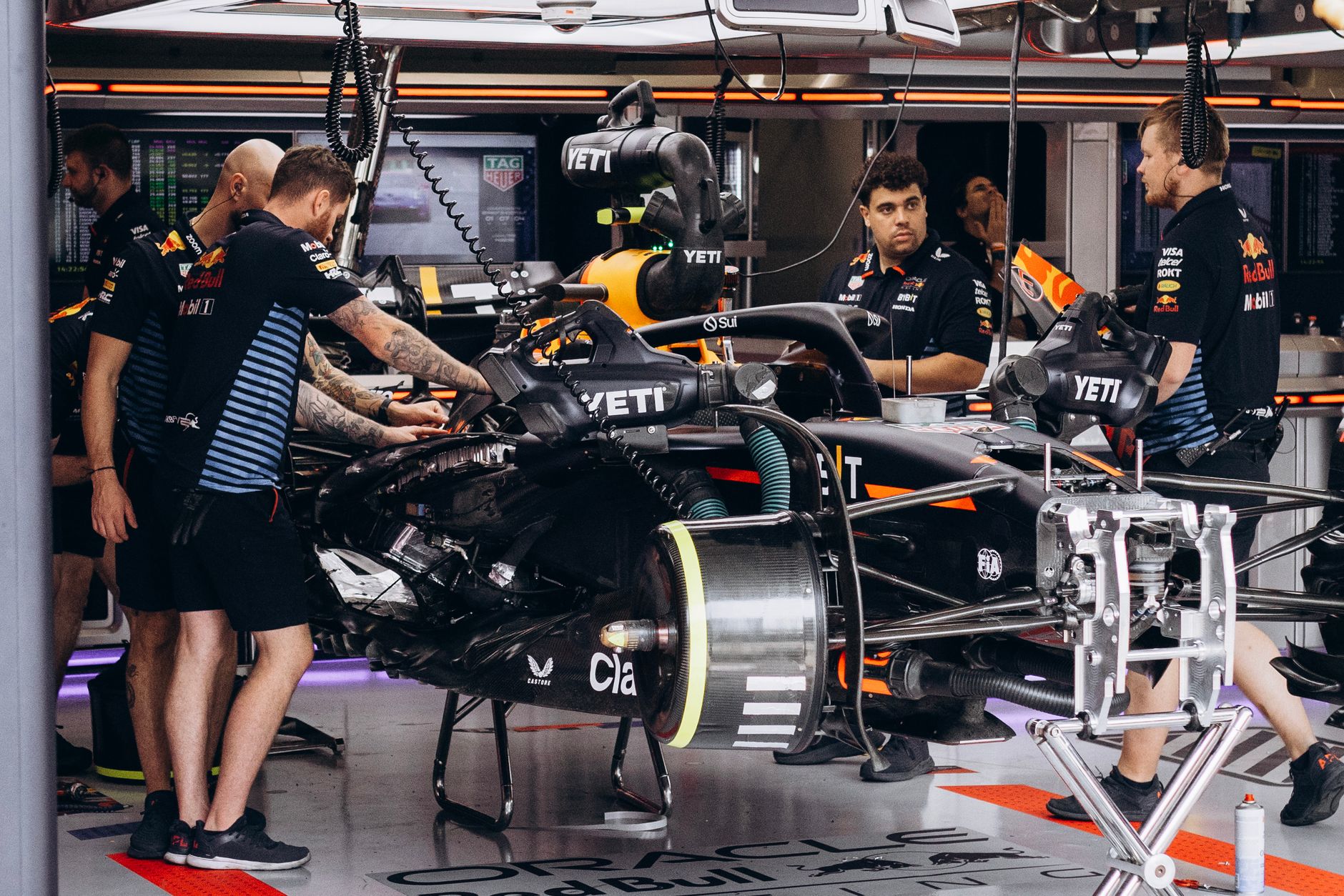
Haas brought new sidepods and a new floor to Canada. Those are not cosmetic changes.
The sidepods shape how air moves around the middle and rear of the car. The floor is even more important, because modern F1 cars create a large share of their grip from airflow underneath them.
More stable airflow under the car can create more downforce. Downforce is the invisible load that pushes the car into the track at speed. More of it usually means faster cornering, better braking confidence and stronger traction.
But upgrades rarely work like a simple power switch. A new floor can change how the car reacts to ride height, kerbs, bumps and steering inputs. The driver may feel more grip in one phase of a corner, then less security in another.
That is where Haas appears to be stuck.
Bearman believes the performance is somewhere inside the package. The issue is extracting it without making the car too nervous for the driver. He said qualifying finally gave him a better balance, but that improvement immediately revealed another problem: front locking.
Front locking happens when the front tyres stop rotating under braking. The car then struggles to turn, the tyres can flat-spot, and the driver loses the confidence to attack the braking zone.
That matters at the Circuit Gilles Villeneuve. Montreal rewards late braking and commitment over kerbs. If the front end locks just as the driver starts to push, lap time disappears quickly.
Montreal punished the learning curve
The Sprint format made the problem sharper.
Canada was the third Sprint weekend of the 2026 F1 season. Sprint weekends give teams only one practice session before competitive running begins. That leaves very little time to test ride heights, suspension settings and aerodynamic balance.
Haas also lost useful rhythm in FP1 because the session had three red flags. A red flag stops the session, which cuts into the laps teams need for comparison runs.
During that practice, Ocon placed 13th with a 1:16.497, while Bearman was 19th on a 1:17.770. Both laps came on Pirelli’s hard tyre, the most durable dry compound. It usually gives less one-lap grip than the medium or soft tyre.
Sprint qualifying at least gave Haas more running. Ocon reached SQ2 and qualified 14th for the Sprint. Bearman also progressed and lined up 15th.
But Haas then made a bigger call before the Sprint itself. Bearman’s car came out of parc ferme so the team could make set-up changes.
Parc ferme is F1’s locked set-up period. Once a car is under parc ferme rules, teams cannot freely change key settings without a sporting penalty. If they do, the driver usually starts from the pit lane.
Bearman took that consequence because Haas needed answers more than it needed to defend a low Sprint grid spot. He started from the pit lane, then finished 18th in the Sprint. Ocon finished 13th.
By Grand Prix qualifying, Ocon also had the updated package. That gave Haas two cars to read from, but it did not produce a clean result. Ocon dropped out in Q1 and qualified 17th with a 1:14.845. Bearman made Q2, but only reached 16th with a 1:14.416.
For a midfield team, that is a costly place to start. The points normally sit inside the top 10, so Haas now needs race pace, strategy help or weather disruption to turn this into anything meaningful.
The bumps changed the question
Bearman’s comments point to a classic upgrade problem. Haas may have added aerodynamic load, but the car has become more sensitive to how it runs over the road.
Montreal is not a smooth permanent circuit. It has bumps, heavy braking zones and kerbs that drivers must use to be quick. A car that works on a flatter track can feel messy here.
Bearman said the set-up that might have offered the best ultimate lap time was very hard to live with over bumps and kerbs. When Haas adjusted the car to make it easier to drive, corner entry became more difficult. When the team stiffened the car to chase performance, confidence disappeared.
That is the knife edge.
Suspension stiffness affects how much the car moves over bumps and kerbs. A stiffer car can keep the floor closer to its ideal aerodynamic position, which helps downforce. But if it becomes too harsh, the tyres lose contact and the driver cannot lean on it.
A softer or more forgiving car can help the driver, but it may disturb the airflow under the floor. That can cost downforce just when the driver needs support on corner entry.
Haas team principal Ayao Komatsu offered the more positive reading. The aerodynamic load appears to be arriving, but the team is now isolating the issues that appear in specific corners.
That is important beyond Montreal. If Haas understands why the upgrade misbehaves, it can decide whether to tune around it, modify it, or use the data to guide the next development step.
If it does not, the package becomes a problem that travels.
For Bearman, this weekend is also a useful test of patience. Young drivers often get judged on headline results, but development weekends demand a different skill. He has had to compare balance shifts, manage a pit-lane start, and qualify while learning a car that kept changing underneath him.
Ocon faced his own version of the same issue. He received the updated car later, then had only a small number of laps to understand where it had grip and where it did not. That is a tough ask in qualifying, when mistakes carry immediate consequences.
The best-case scenario for Haas is that Sunday gives it more data and a chance to rescue a result. Bearman also pointed to wet weather as a possible opening. Rain can compress the field because grip drops, tyre warm-up becomes harder, and strategy calls matter more.
But rain also punishes nervous cars. If the VF-26 already lacks confidence on corner entry and under braking, wet conditions could make the same weaknesses louder.
So Haas enters the Canadian Grand Prix with two jobs. It must race from a difficult position, and it must decide what this upgrade is really telling the team.
The car may have gained performance on paper. Montreal has shown that performance is only useful when the driver can reach it on track.