Charles Leclerc will start the Canadian Grand Prix from eighth after a qualifying session he described as a “disaster”, capping a difficult Ferrari weekend in Montreal.
The Monegasque driver has often been one of Formula 1’s sharpest one-lap performers. At Circuit Gilles Villeneuve, that strength deserted him. He said the Ferrari never gave him the feeling he needed across braking, corner entry and tyre preparation.
That matters because Montreal is a circuit where confidence does a lot of lap time. The track asks drivers to brake hard, ride kerbs and attack walls on corner exit. When the car feels vague, every metre becomes risk.
Leclerc’s qualifying result also stands out because Ferrari did not look lost as a team. Lewis Hamilton qualified fifth in the other Ferrari and sounded much more comfortable with his car by the end of the session.
For Leclerc, the problem was personal and technical. He pointed to brakes on Friday, tyres in qualifying, and a broader lack of rhythm across the weekend. In simple terms, the car never entered the operating window he needed.
That phrase, “window”, is common in F1. It means the narrow range where tyres and brakes deliver grip and confidence. If the tyres are too cold, they slide. If they overheat, they lose bite. If the brakes are not giving consistent feel, the driver cannot attack.
Leclerc said he felt close to the wall in almost every corner because the tyres were not behaving as expected. Around Montreal, that is more than discomfort. It directly affects commitment.
The Circuit Gilles Villeneuve rewards drivers who can build tyre temperature before the timed lap without using too much grip too early. That balance is delicate, especially when track conditions shift.
Leclerc accepted that Hamilton managed the same challenge better. That is important inside Ferrari. It gives the team a direct comparison and leaves Leclerc with homework before the race.
Hamilton will start three places ahead of him, in fifth. He did not claim Ferrari had front-row pace, but he felt the car moved in the right direction through qualifying. He highlighted setup changes that made him happier to attack.
Hamilton’s comments focused on braking, corner entry stability and a setup direction that suited him better. For a driver who depends on feel at the front axle, that is a useful step.
He also believed a cleaner final lap might have improved his position. That does not change the starting grid, but it shapes Ferrari’s race mood. One side of the garage sees a car improving. The other sees a weekend slipping away.
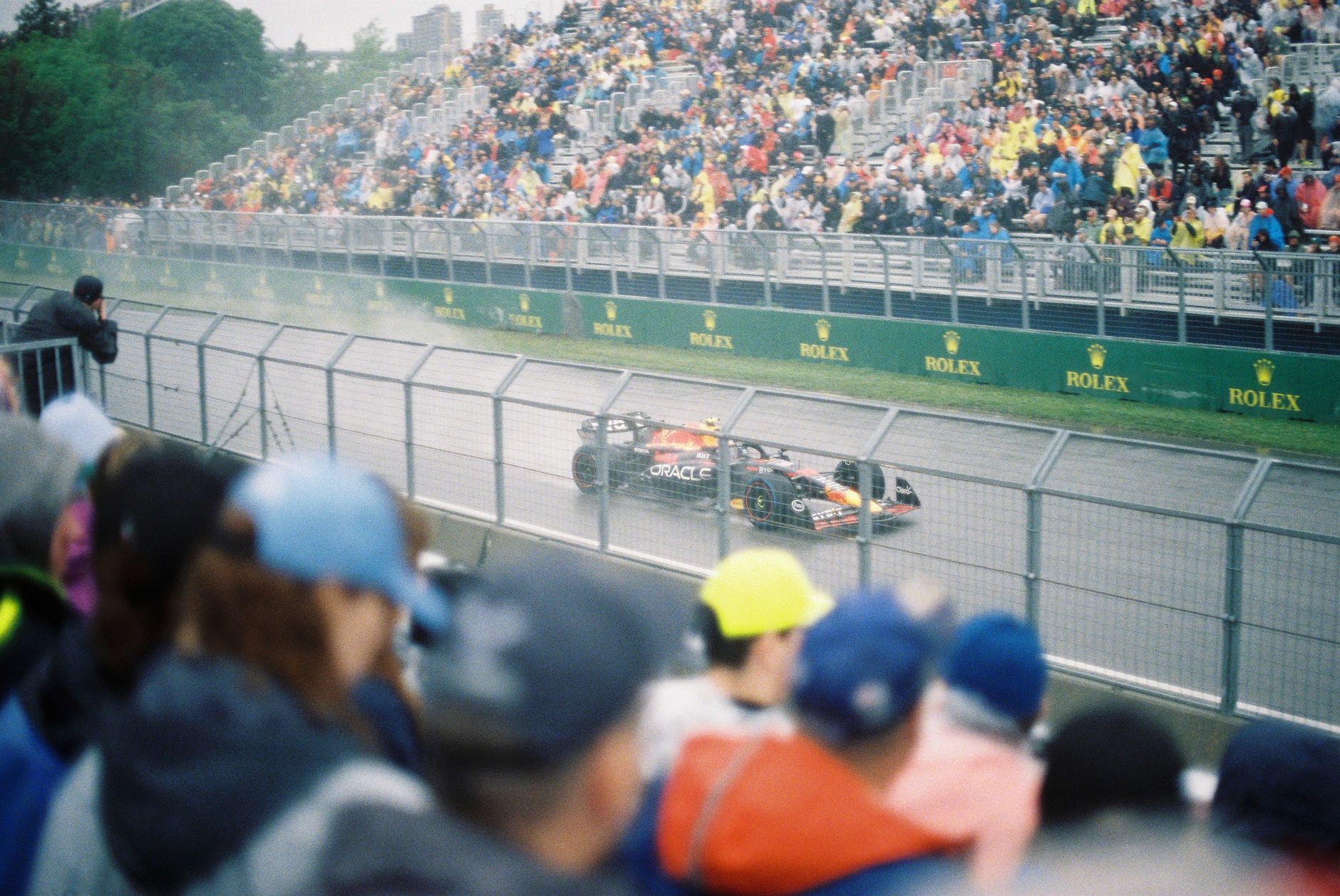
Rain could decide how big that gap becomes on Sunday.
Leclerc does not expect wet weather to rescue him. He suggested rain may make it even harder to heat the tyres. That is a serious concern because wet or cool conditions often demand fast tyre warm-up.
Hamilton sees the same forecast differently. He hopes rain can bring Ferrari closer to the cars ahead. Wet races can reduce the advantage of outright car performance and put more weight on driver feel, strategy calls and tyre timing.
That contrast sums up Ferrari’s Montreal problem. The same conditions that might give Hamilton a chance could leave Leclerc fighting the car again.
There was another piece of confirmed news around Hamilton. He was investigated by stewards for an alleged impeding incident, but he received no grid penalty. That means he keeps fifth place for the race start.
For Ferrari, that decision matters. A penalty would have pushed Hamilton into heavier traffic and weakened the team’s best launch point. Instead, he remains close enough to pressure the Mercedes and McLaren cars ahead if the race becomes messy.
Leclerc starts eighth with a different target. His first job is survival through the opening laps, then tyre management. Montreal’s braking zones create overtaking chances, but they also punish locked wheels and poor exits.
If rain arrives, visibility and timing will become central. Drivers must judge when to move between dry, intermediate and wet tyres. A stop too early can destroy lap time. A stop too late can cost track position or worse.
That is where Ferrari’s pit wall will face pressure. Split conditions between two drivers often force teams into quick calls. Hamilton may want aggression if he feels the car beneath him. Leclerc may need caution if tyre temperature remains his main weakness.
The championship context adds another layer. Leclerc sits ahead of Hamilton in the standings, with both Ferrari drivers chasing stronger consistency. A difficult qualifying day does not decide a season, but repeated one-lap issues can damage Sundays before they begin.
Canada also carries a specific frustration for Leclerc. He suggested the circuit has rarely clicked for him in qualifying, even when his race pace has looked better. That is unusual because qualifying struggles often carry into the Grand Prix.
His own explanation was that his driving style seems better suited to race conditions at this track. Over a stint, fuel load, tyre behaviour and rhythm can change the picture. The question is whether he can reach that phase without losing more ground.
Hamilton’s weekend is more encouraging, but not complete. Fifth is a useful position, not a breakthrough. He still could not beat the Mercedes and McLaren runners in qualifying, and he mentioned time loss on the back straights.
That points to a limitation Ferrari may carry into the race. If the car lacks straight-line strength, overtaking becomes harder, especially against rivals with good traction out of the final chicane.
Still, a wet Canadian Grand Prix can rewrite expectations quickly. Safety cars are common at this venue because the walls sit close and mistakes often leave debris. Track position can swing on one neutralisation.
For Leclerc, the race is about damage limitation and rediscovery. He needs tyre temperature, clean braking and enough confidence to use the Ferrari’s pace when fuel burns off.
For Hamilton, it is a chance to turn a better-feeling Saturday into a meaningful Sunday. Rain would not guarantee that, but it could bring him into a fight he may not have in a straightforward dry race.
Ferrari therefore enters the Canadian Grand Prix with two very different stories under one roof. Leclerc is searching for answers after qualifying eighth. Hamilton starts fifth, keeps his place after the stewards’ review, and wants weather to shake up the order.
That makes Ferrari one of the most interesting teams to watch in Montreal. Not because everything is going right, but because one garage has found a direction while the other is still trying to make the weekend start.