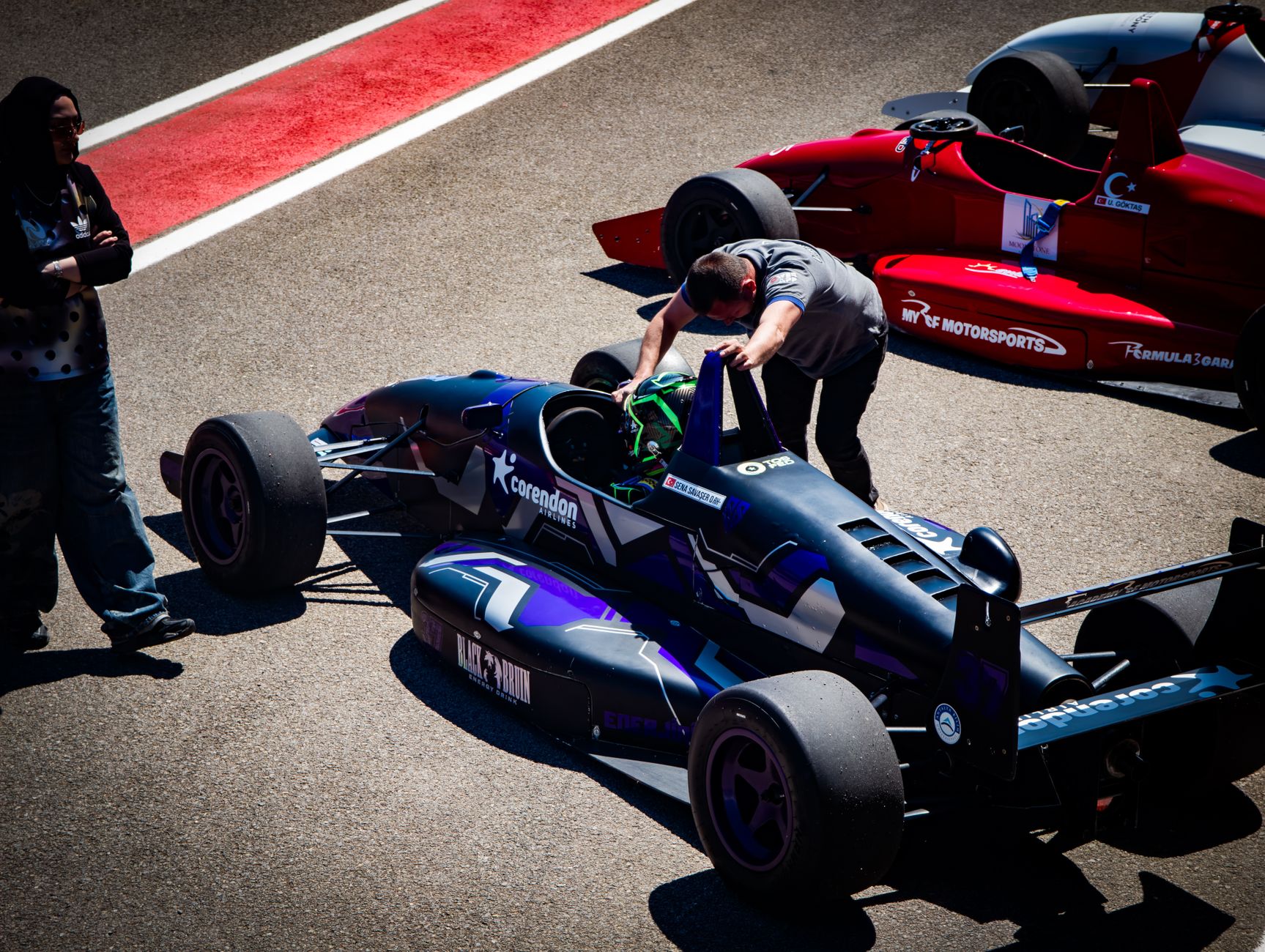
George Russell put Mercedes on top in Canadian Grand Prix qualifying, beating team-mate Kimi Antonelli as Lando Norris completed the top three for McLaren.
The official post-qualifying press conference listed Russell first, Antonelli second and Norris third after Saturday’s session in Montreal. That gives Mercedes the cleanest possible starting picture at the sharp end, with both cars ahead of a McLaren challenger before race day.
The result also carried a useful subplot. Russell said his final lap arrived after a difficult session in which Mercedes had made setup changes with Sunday in mind. Those changes did not appear to make qualifying easier.
That is the kind of compromise Formula 1 teams often face at a circuit like Canada. A car that feels sharp over one lap may not always be the easiest car to race. Teams can chase qualifying grip, race stability, tyre life, or a balance between all three.
Russell’s comments suggested Mercedes had accepted some short-term pain for a possible race benefit. He said the team had made changes based on the forecast for Sunday and admitted those changes may have hurt the car in qualifying trim.
In simple terms, Mercedes may have tuned the car for conditions expected in the Grand Prix rather than only for the fastest single lap. That can affect how quickly the tyres warm up, how secure the rear of the car feels, and how confident the driver feels when attacking kerbs and braking zones.
Russell described the session as challenging and said the car had been taken “out of sync” by the changes. He also acknowledged that Antonelli had looked more competitive through the session before Russell produced the decisive final lap.
That matters inside a team as much as outside it. A front-row lockout looks simple on paper. It rarely feels simple from the cockpit. Russell had to recover his rhythm late, while Antonelli had been close enough to threaten pole.
For Antonelli, second place was both a strong result and a reminder of how fine the margin can be in qualifying. He said it had been difficult all weekend to place the tyres in the correct operating window.
That phrase is central to modern F1. A tyre window means the temperature range where the rubber gives its best grip. Too cold, and the driver slides because the tyre does not bite. Too hot, and the tyre loses grip because the surface overheats.
Qualifying makes that even harder. Drivers may get only one clean push lap at the right moment. Traffic, preparation laps, track temperature and brake warm-up can all affect whether the tyres arrive at Turn 1 ready to perform.
Antonelli said it was hard to commit on lap one and felt there was still some time left in the car. That is not unusual for a young driver in a tight qualifying session. The first lap on fresh tyres demands immediate trust, especially on a circuit where walls punish overreach.
Canada usually rewards drivers who can attack braking zones with confidence. The lap is not built only on fast corners. It is built on traction, kerb use and stopping power. A small lack of confidence under braking can cost time quickly.
Russell’s late improvement therefore says two things. First, Mercedes had enough pace to put both cars at the front even when the session was not smooth. Second, Russell still found a way to reset his driving at the end, when the pressure was highest.
Norris being listed third keeps McLaren in the immediate fight. The supplied facts do not give his session detail, lap time or post-session comments, so the safer conclusion is simple: McLaren remained close enough to start in striking range behind the Mercedes pair.
That position can still be dangerous for Mercedes. A two-car front row gives a team control at the start, but it also creates internal risk. Both drivers want the same piece of road into the opening corners. A fast-starting McLaren behind them will be ready to punish hesitation.
The race start will be especially important because track position at the front can shape strategy. Leading cars can choose when to pit. Chasing cars often have to react, gamble, or use undercuts, where a driver pits earlier to gain time on fresher tyres.
The press conference excerpt did not provide the full grid, lap times, penalty status or weather detail. That limits what can be stated with certainty. The confirmed competitive picture is the top three order and the drivers’ own explanation of their qualifying runs.
Still, the story is clear enough for Sunday. Mercedes has the front-row advantage, but Russell did not present it as a perfect session. Antonelli felt there was more available. Norris starts close enough to keep pressure on both.
For Russell, this is exactly the type of qualifying result that can define a weekend. He turned a messy session into a front-starting result. If the race setup choices pay off, the Saturday compromise may look smart by the chequered flag.
For Antonelli, second place gives him a serious platform. His comments showed frustration at missed time, but also composure. Starting beside Russell gives him a direct benchmark and a chance to convert one-lap pace into race authority.
For fans in India, the practical takeaway is straightforward. The Canadian Grand Prix begins with Mercedes in command of the front row, McLaren immediately behind, and race-day setup choices already part of the story.
The key question now is whether Russell’s late qualifying rescue becomes the start of a controlled Mercedes Sunday, or whether Antonelli and Norris turn that front-row pressure into a very different race.