George Russell will start the Canadian Grand Prix from pole, but Montreal’s weather may decide far more than raw pace.
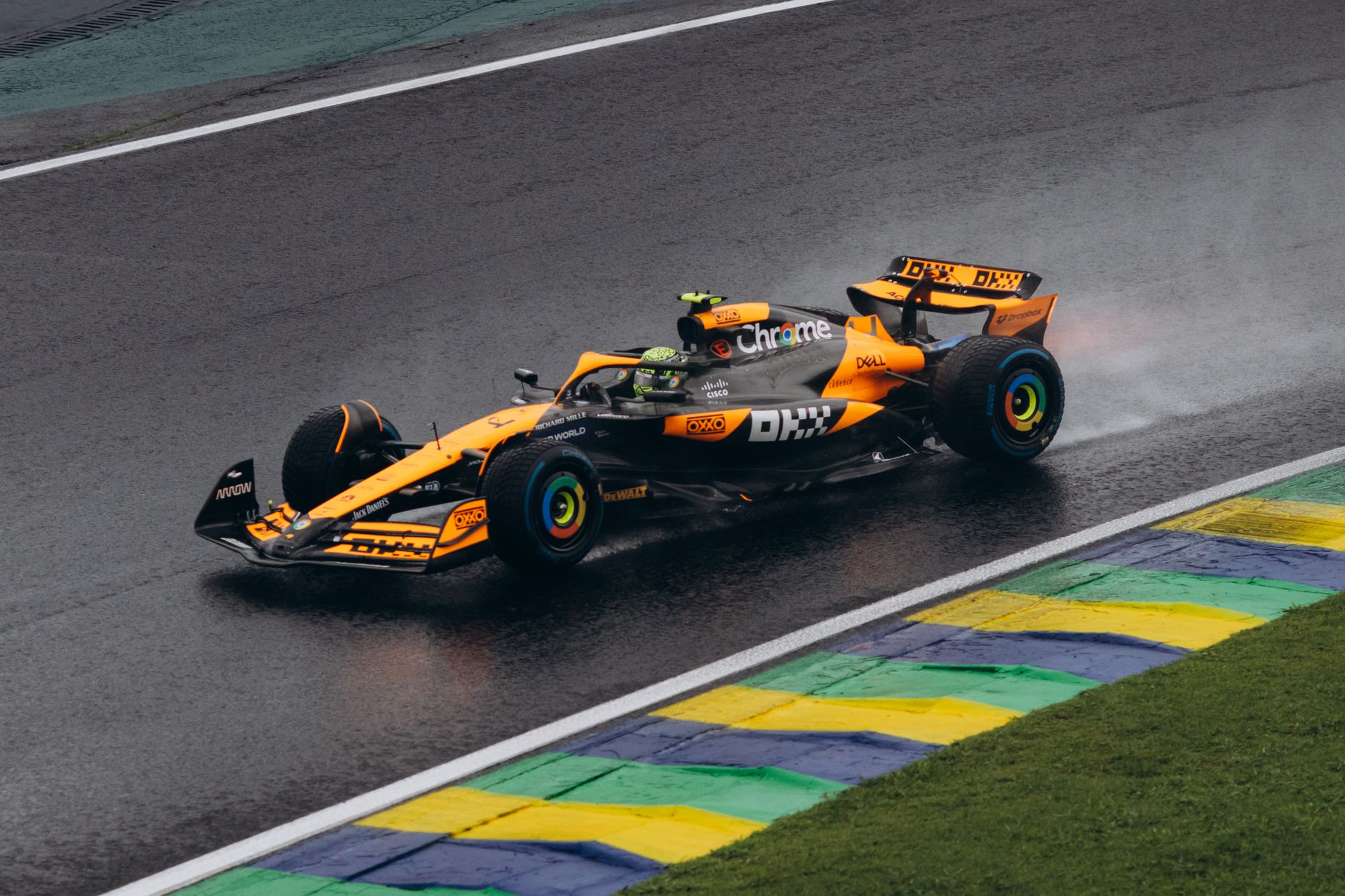
Formula 1 is braced for its first wet race of the 2026 season. That matters because this generation of cars has not yet raced in the rain. The field has limited real-world knowledge, the walls are close, and the Circuit Gilles Villeneuve rarely forgives a small mistake.
Mercedes owns the front row. Russell starts first, with team-mate Kimi Antonelli alongside him. Lando Norris and Oscar Piastri lock out row two for McLaren. Lewis Hamilton lines up fifth for Ferrari, with Max Verstappen only sixth for Red Bull.
That grid already had enough tension after Russell and Antonelli made contact during Saturday’s Sprint. Mercedes has still left both drivers free to race. In the dry, that would put the spotlight on team management into Turn 1. In the wet, it becomes a test of trust, patience and radio discipline.
The opening lap in Montreal is never gentle. Cars brake hard into the first chicane, then immediately change direction through Turn 2. In rain, the racing line can turn slippery, visibility drops in spray, and wheelspin becomes a constant threat.
Russell said after qualifying that he enjoys rain and sees opportunity in it. He also admitted the race will not be easy. That is the key point. Pole gives him clean air at the start, but it does not protect him from Safety Cars, tyre temperature problems or a team-mate with nothing to lose.
Antonelli’s position is even more intriguing. The teenager has a front-row start at one of the most punishing circuits on the calendar. He highlighted tyre temperature as a deciding factor, especially in the first laps. In simple terms, wet tyres only work properly inside a narrow heat window. Too cold, and they slide. Too hot, and they wear or overheat.
That could make the race less about one-lap speed and more about touch. Drivers must feed in throttle smoothly, brake without locking, and search for grip off the normal dry line.
The 2026 cars add another layer. The current power units produce heavy torque, which means the rear wheels can spin more easily when drivers apply power. In the wet, that can turn corner exits into a trap.
The supplied race briefing also points to important restrictions in wet conditions. The FIA can ban Straight Line Mode, where front and rear wings open on straights to reduce drag. Boost Mode, which provides an extra 350kW out of corners, is also not used in wet conditions.
For fans, the takeaway is simple. If those systems are restricted, drivers lose some of the straight-line tools that shape racing in the dry. The contest shifts toward mechanical grip, tyre warm-up, braking confidence and traction.
Verstappen, who starts sixth, has already predicted chaos. His comment carries weight because he completed damp running with a 2026 Red Bull during a Barcelona shakedown in January. That does not mean he has a race-winning advantage. It does mean he has at least felt how this rules package behaves with water on track.
Pierre Gasly also has useful wet experience in the new cars. He drove the Alpine in wet conditions at Silverstone in January, then completed a two-day wet tyre test at Magny-Cours. Gasly starts only 14th, so his challenge is traffic. But if conditions become messy, that experience could help him judge grip earlier than others.
Ferrari’s case is complicated. Hamilton starts fifth and Charles Leclerc starts eighth. Both have run 2026 machinery in the rain, which should help. Ferrari has also looked stronger in the corners than on the straights, so a wet race could hide some straight-line weakness.
Yet Leclerc has warned that low temperatures are a concern for Ferrari. He said his weekend had already been difficult because of temperature, and rain will not improve that. If the Ferrari cannot switch on its tyres quickly, it may struggle even if the car has downforce.
Hamilton’s grid spot gives Ferrari a cleaner route to the podium. He starts ahead of Verstappen and Leclerc, with McLaren directly in front. But Montreal often rewards timing. One well-placed stop under a Safety Car can change the order more than raw pace.
McLaren has the most balanced attacking position. Norris starts third, Piastri fourth. They sit behind the Mercedes pair, close enough to benefit if the silver cars delay each other, but far enough from the front-row politics to run their own race.
Norris has called the race extremely tricky, mainly because of tyre temperature. That concern is logical. If soft slicks were already hard to warm, intermediate and full wet tyres will be harder still in cooler rain. Drivers may spend several laps building confidence before pushing.
That creates a possible opening for Verstappen from sixth. He does not need the fastest car to become dangerous in a wet Montreal race. He needs visibility, patience and rivals who make mistakes. The Red Bull starts behind Hamilton, so the early fight may be about clearing Ferrari before the leaders escape.
The Safety Car risk is not a side note here. Montreal has walls close to the racing surface, and damaged cars often stop in places where marshals need protection. Pre-race analysis noted that only one of the last eight Grands Prix in Montreal has run without some form of Safety Car.
That statistic changes strategy. Teams may delay a stop if they expect a caution. Others may pit early and hope the field bunches later. In rain, the call between intermediates and full wets can be decisive. Intermediates are for light standing water. Full wets are for heavier rain and deeper spray.
The front row also changes how Mercedes must manage risk. Russell has earned track position. Antonelli has earned the right to race. But two team cars into the first braking zone in wet conditions is a high-pressure situation. A conservative start may protect the result. An aggressive one could invite McLaren into the lead.
For Indian viewers, the timing needs care because the published UK broadcast times do not match IST. The Canadian GP starts at 9pm UK time on Sunday, May 24. That converts to 1:30am IST on Monday, May 25.
The support schedule also shifts into the Indian evening and night. F1 Academy Race 3 is listed for 3:40pm UK time, which is 8:10pm IST on Sunday. The F2 Feature Race is 5pm UK time, or 9:30pm IST. The Grand Prix build-up begins at 7:30pm UK time, which is midnight IST.
So the race is technically a late Sunday night build-up for Indian fans, but a Monday morning Grand Prix start.
The result may shape more than one weekend. Mercedes has a rare front-row lockout. McLaren has both cars ready to pounce. Ferrari has a chance to turn a weakness into less of a problem. Verstappen starts lower than usual, but rain keeps him firmly in the story.
Montreal already punishes impatience. Add 2026 cars, cold wet tyres, uncertain power delivery and close walls, and this becomes a race where the fastest driver may not be the one who wins.
The driver who wins is likely to be the one who stays calm while everyone else discovers the limits.