Oscar Piastri dismissed the Ferrari start scare before the Canadian Sprint, then McLaren held firm in Montreal.
Ferrari still looks dangerous off the line. But Saturday’s 23-lap Sprint did not show a red launch advantage over Piastri. That matters because race starts have become one of F1’s sharpest 2026 political arguments.
The new power units have changed how drivers prepare the car for clutch release. Teams now chase clean launches with different turbo choices, battery deployment and start procedures. In simple terms, the first 200 metres now carry more engineering politics than usual.
Confirmed in Montreal
The confirmed picture is now stronger than the pre-race noise. Piastri started fourth, behind George Russell, Kimi Antonelli and Lando Norris. Lewis Hamilton and Charles Leclerc lined up directly behind him for Ferrari.
Piastri did not sink into Ferrari traffic at the start. He finished fourth, with Leclerc fifth and Hamilton sixth after a late shuffle. Russell won, Norris took second and Antonelli completed the Sprint podium.
That left Mercedes with 14 Sprint points and McLaren with 12. Ferrari scored seven. Red Bull took only two through Max Verstappen, while Arvid Lindblad added one point for Racing Bulls.
So the Montreal Sprint gave McLaren a useful answer. Ferrari had two cars close enough to threaten. McLaren still came away ahead in the direct Piastri versus Ferrari fight.
Piastri’s confidence also had a clear source. Before the Sprint, he told Sky Sports that “our starts have been better than the Ferraris’ all year.” He said McLaren would try to use that edge while Mercedes continued improving its own launch phase.
That was not just a throwaway line. Piastri was starting between the Mercedes pair ahead and the Ferraris behind. At Circuit Gilles Villeneuve, the run to Turn 1 is short enough to punish hesitation. It is also long enough for a strong launch to create overlap.
For Piastri, the smart racing priority was obvious. He had to attack forward without giving Hamilton or Leclerc an easy lane. Canada is a stop-start circuit, with heavy braking zones and kerbs that invite mistakes. Track position has value because dirty air and energy management still shape the race.
Vasseur’s public pushback
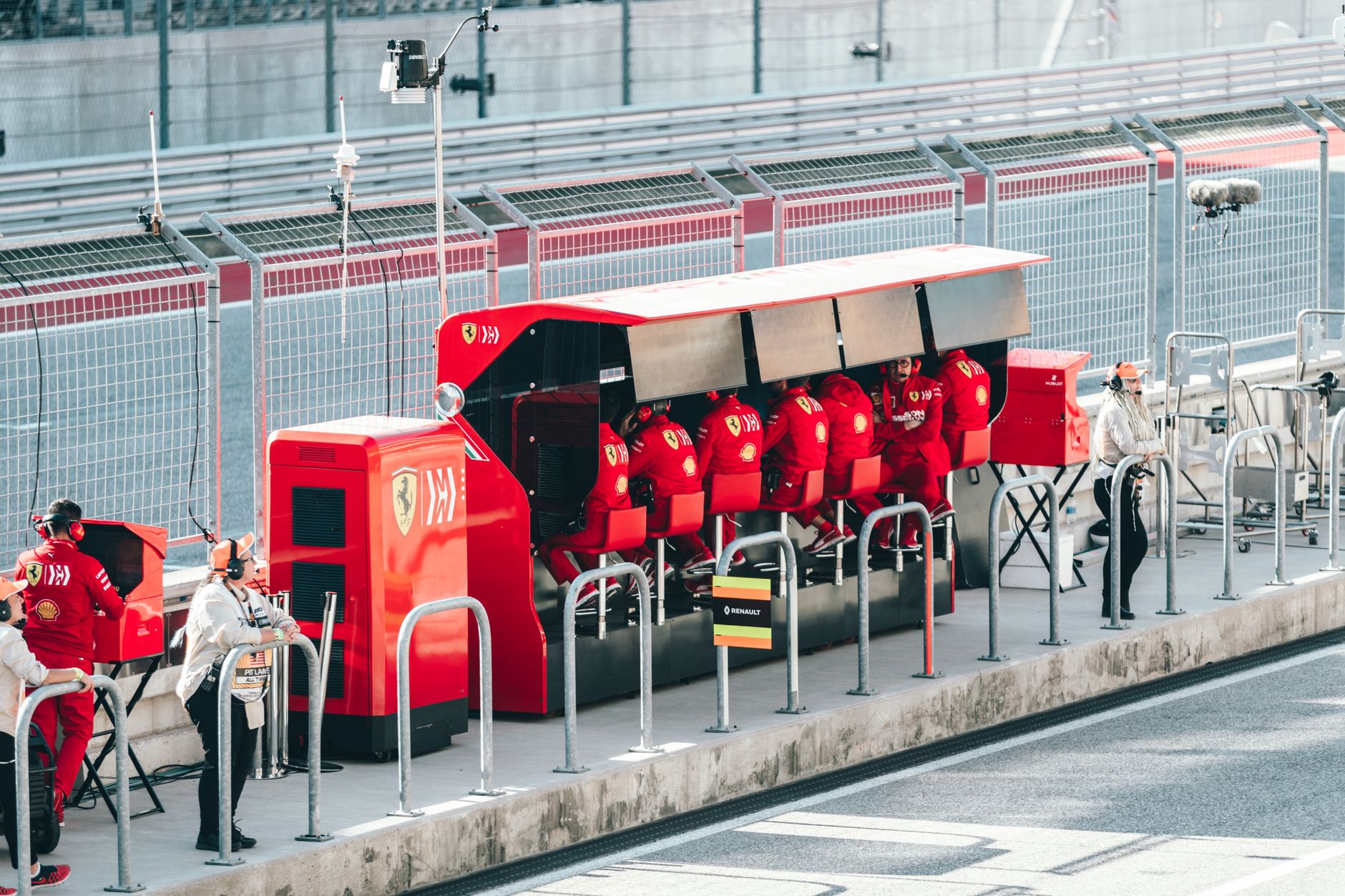
The public reaction around Ferrari is separate from the confirmed Sprint result. Fred Vasseur has not hidden his irritation over the way F1’s start rules have evolved.
Vasseur told The Race that the politics around the start changes were “well played but not very fair.” He also called the situation harsh for Ferrari. His argument is easy to understand, even for fans who do not follow power-unit detail.
Ferrari appears to have built around launches as a real performance target. Reports have linked that to a smaller turbo concept. A smaller turbo can reach its useful operating range sooner. The trade-off can be less peak power higher up the speed range.
That choice matters more in 2026 because the MGU-H has gone. The MGU-H was the electric motor-generator linked to the turbo on the previous hybrid engines. It helped keep the turbo responsive. Without it, drivers need the engine and hybrid system ready before the lights go out.
The FIA has also acted on safety concerns. On April 20, it announced a low power start detection system. If a car accelerates abnormally slowly after clutch release, automatic MGU-K deployment can trigger. The MGU-K is the electric motor that adds power to the rear wheels.
The FIA also described visual warning lights on affected cars. Those lights are meant to alert drivers behind when a car launches poorly. The governing body’s framing was safety, not sport. The concern is simple: a slow-starting car can become a target for faster cars behind.
Ferrari’s frustration comes from timing and philosophy. If a team sacrifices straight-line power to improve starts, later safety systems can dilute that reward. Rivals will see the same situation differently. They will argue that a dangerous speed difference at launch needs fixing, even if one team planned better.
Still unproven about Ferrari
The uncertain part remains the exact size of Ferrari’s advantage. No public dataset gives every team’s clutch release, reaction, acceleration and battery state across all starts. No public document proves the full performance cost of Ferrari’s reported turbo choice.
That makes Piastri’s claim strong, but not final. Starts depend on grip, tyres, engine mode, clutch bite point, driver timing and the side of the grid. A good launch on one track does not settle a season-long technical debate.
Canada also narrowed the question. The Sprint did not show Ferrari jumping Piastri from behind. It did show Ferrari staying close enough to keep McLaren honest. That is the useful read, rather than a sweeping judgement on every 2026 start.
For the championship mood, the result suits McLaren. Norris gained seven points and Piastri banked five on a weekend where Mercedes had the sharper front-end pace. Ferrari lost a chance to turn launch talk into scoreboard damage.
For Ferrari, the story is more awkward. The team can still argue that its design choice deserved greater sporting reward. But once the Sprint ended with Leclerc and Hamilton behind Piastri, the public argument became harder to sell as a Canada performance headline.
The timing also matters for Indian viewers. The Sprint ran on Saturday, May 23. The Grand Prix follows at 20:00 UTC on Sunday, May 24, which is 1:30am IST on Monday, May 25.
That leaves one more, much bigger start in Montreal. This time, points are not capped at eight for the winner. If Ferrari launches cleanly in the Grand Prix, the debate will return quickly. If McLaren again holds position, Piastri’s blunt verdict will carry more weight.