Mathilda Paatz has her first F1 Academy win after a last-lap penalty changed the result in Canada.
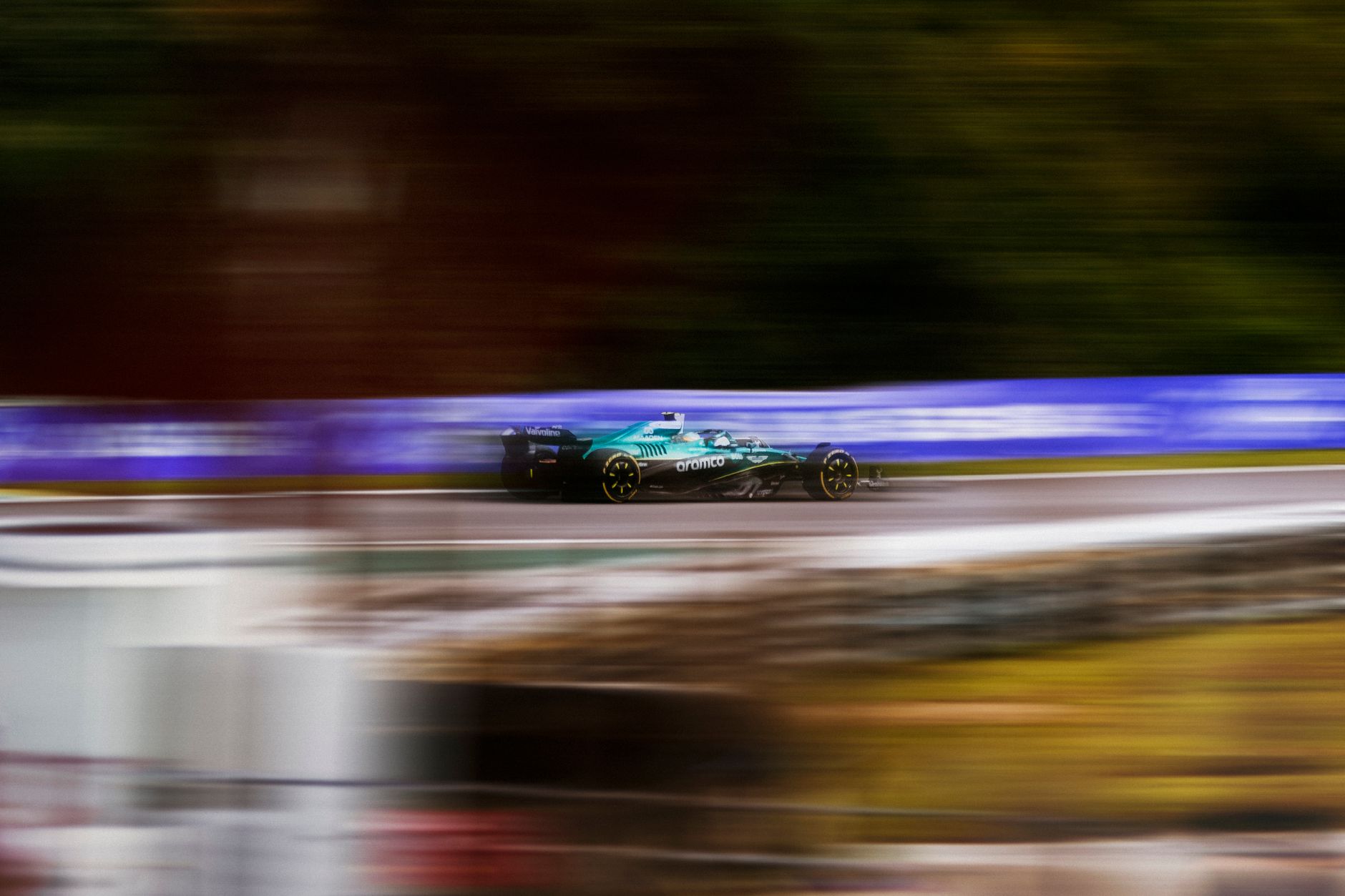
The Aston Martin driver finished second on the road in the Reverse Grid Race. She then moved to victory when Rafaela Ferreira received a five-second penalty for a false start.
It was a sharp swing in a race Ferreira had controlled from the opening metres. She beat polesitter Kaylee Countryman at the start, handled two Safety Car restarts, and led into the final lap.
Then came the decision that changed everything.
A false start means a driver moves too early before the lights go out. In junior racing, the punishment often arrives as a time penalty rather than a drive-through. That keeps the car on track, but adds time to the final race result.
Ferreira crossed the line first, but the five seconds dropped her out of victory contention. Paatz inherited the win, giving herself and Aston Martin their first F1 Academy victory.
For Paatz, the timing could hardly have been better. She had already taken her maiden podium in the earlier Opening Race. Within the same race day, she moved from first-time podium finisher to race winner.
That matters in F1 Academy because confidence can shift quickly across a weekend. The cars are closely matched, the races are short, and track position often decides the story. A clean run near the front can change how a driver attacks the next start.
The result also underlined how brutal reverse-grid racing can be. The format flips part of the field from a previous session or race order. It gives different drivers a shot at the front, but it also creates pressure quickly.
Countryman started from pole and looked set for a breakthrough podium. Ferreira jumped her at the start, but Countryman stayed in the fight and later gained from the post-race reshuffle.
She was promoted to second after another penalty hit Alba Larsen. Larsen had appeared to grab second from Countryman at the final chicane, but stewards later penalised her for contact with Emma Felbermayr.
That five-second penalty dropped the Ferrari driver to 11th. Countryman therefore secured second, while Payton Westcott completed the podium.
Both Countryman and Westcott left with meaningful results. Countryman claimed a first podium after losing the lead at the launch. Westcott gave PREMA Racing another strong finish on a messy day.
Westcott finished ahead of PREMA team-mate Natalia Granada, who took fourth. Lisa Billard followed in fifth, with Felbermayr recovering to sixth after the incident with Larsen.
The lower half of the points order moved around after the penalties. Megan Bruce was classified seventh, while Ferreira ended up eighth despite leading most of the race.
That final classification will sting for Ferreira. She had done the visible hard work by taking the lead and surviving two restarts. A Safety Car restart bunches the pack again after an incident, removing any lead the front driver built.
For a leader, that means judging the throttle, tyre grip, and timing while rivals sit close behind. Ferreira managed that part. The start infringement cost her the reward.
Ella Lloyd also lost ground after the flag. She had taken seventh on track, but a post-race penalty dropped her to 13th.
The race therefore became a reminder of one core junior-series lesson. Winning pace is not enough if execution slips at race control level. Starts, track limits, contact and restart behaviour all carry heavy consequences.
For Indian fans following the Road to F1 ladder, this is exactly where F1 Academy becomes compelling. The series is not only about future names. It shows how young drivers handle the same pressure points that define Formula 1 weekends.
Starts matter. Restarts matter. Stewarding matters. A five-second penalty can turn a win into a lower-points finish before a driver reaches parc ferme.
Paatz took advantage because she stayed close enough to benefit. That sounds simple, but it is a valuable race skill. When a rival has a penalty, the next car must remain within the penalty window.
In this case, Paatz did enough on the road. She then gained the victory when the timing screens applied Ferreira’s added five seconds.
The result also changes the emotional shape of the weekend for Aston Martin’s F1 Academy programme. A first win gives the driver and team a clear marker. It also gives Paatz a stronger platform before the next race.
The weekend is not finished. Alisha Palmowski, who retired early after contact with Bruce, will start the Feature Race from pole.
That gives Palmowski an immediate chance to reset. An early retirement can ruin one result, but pole position offers track position for the main race.
The Feature Race starts on Sunday at 10:45 local time. It should carry extra tension after a penalty-heavy Reverse Grid Race.
Palmowski has the cleanest opportunity from the front. Paatz arrives with momentum. Ferreira needs a response after losing a win she had in her hands.
Countryman and Westcott will also carry belief from the podium. Larsen, meanwhile, must recover from a costly stewards’ decision after briefly looking set for second.
The Canadian F1 Academy weekend has already delivered the kind of storyline junior categories often produce. A fast start, two restarts, late contact, penalties, and a first-time winner.
Paatz did not take the chequered flag first. But she drove the race that put her in position when the result changed.
That is often how careers move forward in feeder racing. Drivers earn chances, survive disorder, and make sure they are still there when opportunity arrives.