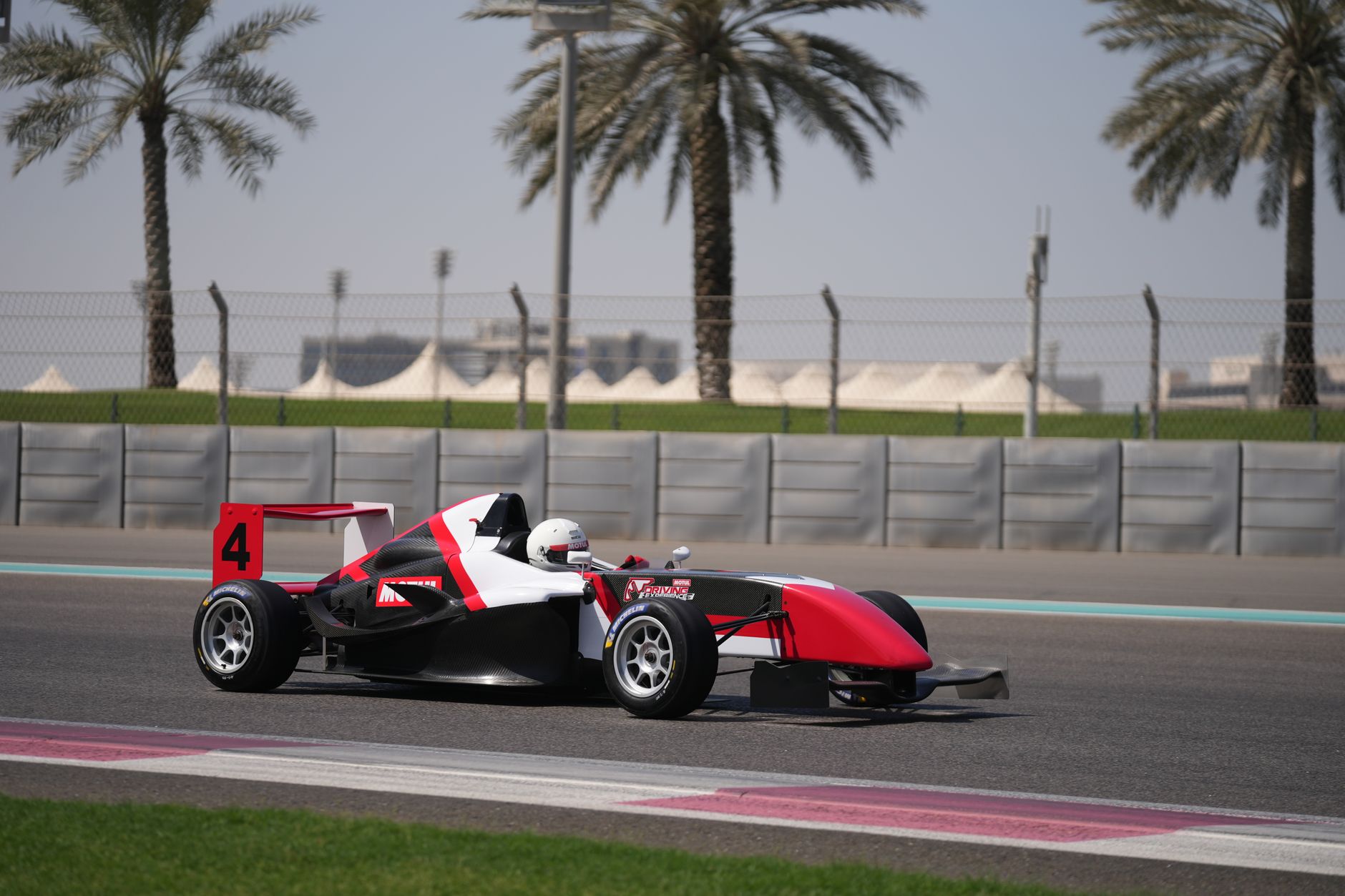
Guillaume Bouzar left Dijon-Prenois with firm control of the French F4 title fight after winning two of the weekend’s three races.
The championship leader arrived at the second round already ahead after the Nogaro opener. He then delivered another statement weekend, taking pole in wet qualifying and converting both front-row starts into victories.
Thibaut Ramaekers also changed the shape of the standings. He scored his first French F4 win in race two and moved into a tie for second in the championship, 47 points behind Bouzar.
For a category built around early driver development, Dijon offered a useful snapshot. Bouzar showed the calm expected from a title leader. Ramaekers showed race-winning pace in traffic. Several others showed they still need cleaner weekends to stay in the fight.
Bouzar sets the tone
The weekend began in conditions that tested judgment as much as outright speed. Wet qualifying rewards confidence, but it punishes overdriving. Bouzar handled that balance best and secured a second double pole of the season.
In French F4, that matters heavily. The cars are close enough that track position can define a race. A clean launch from pole often lets a driver control the pace, manage tyres and avoid midfield incidents.
Bouzar did exactly that in race one. He converted pole into the lead and kept the pack behind him while the race became messy further back.
Arthur Eschalier started third, but a heavy lock-up at Turn 5 dropped him to fifth. A lock-up happens when the tyre stops rotating under braking, which costs grip and can damage the tyre surface.
The safety car then appeared twice in quick succession. Kota Tsuchihashi and Mattheo Dauvergne collided at Turn 1 after five minutes, forcing the first neutralisation. Oscar Goudchaux later triggered another interruption after fighting Maverick McKenna over sixth.
Restarts can expose young drivers. The leader must judge the timing, warm the tyres and avoid giving rivals a tow into the first braking zone. Bouzar handled both restarts without drama.
Behind him, Jack Iliffe, Hugo Herrouin, Lilian Soares and Ramaekers fought over second. Herrouin grabbed the runner-up spot at the second restart, while Ramaekers recovered from a poor start and passed Soares late for third.
Bouzar won race one by 1.028 seconds from Herrouin. Ramaekers finished third, ahead of Soares and Iliffe. It was not a huge winning margin, but the control mattered more than the gap.
Ramaekers takes his chance
Race two used the reversed top 10 from qualifying. That format is designed to give more drivers a shot at the front and force faster qualifiers to race through traffic.
Goudchaux started on pole, with Ginevra Panzeri alongside him and Jules Avril third. Goudchaux launched well and led into Turn 1, while Iliffe attacked from fourth.
Iliffe made his move after 10 minutes, passing Goudchaux around the outside at Turn 1. That was a strong overtake because the outside line usually carries more risk under braking.
Ramaekers, who started seventh, was already climbing. He passed Panzeri on the inside of Turn 1 to reach third, then continued forward as Goudchaux began to lose places.
The decisive pass came at Turn 5. Ramaekers dived inside Iliffe with 18 minutes remaining and took the lead. From there, he did not give the race away.
He won by 4.185 seconds from Iliffe, with Avril third. Goudchaux finished fourth after losing the podium late, while Herrouin took fifth. Bouzar limited the damage in sixth.
That sixth place may prove useful later. Championships are rarely built only on wins. They often turn on weekends when a driver avoids a poor score while rivals enjoy their best day.
Ramaekers also claimed the fastest lap of race two with a 1m17.488s. That underlined that his victory was not only about the reversed-grid format. He had the speed once clear.
Control returns in race three
Bouzar restored the pattern in the final race. Starting from pole again, he led into the first corner and gave the field little encouragement.
The race still had early disruption. Contact involving Thomas Senecloze sent him into the barriers at Turn 4 and brought out the safety car. Racing resumed briefly before another neutralisation, this time after Dauvergne pulled off following contact at Turn 1.
With 10 minutes left, the field went green again. Bouzar built the gap he needed, even with Soares pressing him to the finish.
Herrouin had been fighting Lewis Francis over fifth, but an issue dropped him out of the top five. That hurt his championship position on a weekend when Bouzar and Ramaekers both collected major points.
Bouzar won race three by 1.946 seconds from Soares, with Iliffe third. Tom Dussol finished fourth, while the listed classification placed Shane Chandaria fifth and Avril sixth.
Bouzar also set the race’s fastest lap, a 1m17.219s. That gave his final win extra weight. He had pole, race control and late-race pace in the same package.
Title fight tightens behind him
After Dijon, Bouzar leads the championship with 100 points. Ramaekers and Soares are tied on 53, with Herrouin close behind on 52.
That is a useful cushion for Bouzar this early in the season. A 47-point lead does not end a French F4 title race, but it changes the pressure. Rivals now need big scores and clean weekends.
Ramaekers leaves Dijon with the clearest momentum boost. His first win gives him proof that he can attack from deeper on the grid and still finish the job.
Soares also remains firmly in the chase after podium pace across the weekend. Herrouin, however, will see race three as a missed chance after running near the front group before his issue.
Iliffe’s weekend should not be ignored either. He finished fifth, second and third across the three races and now sits fifth in the standings on 33 points. That consistency can pull a driver into the conversation if the leaders trip over each other.
Goudchaux is sixth with 32 points, followed by Dauvergne on 28, Tsuchihashi on 27, Francis on 24 and Avril on 22. The top 10 remains crowded, but Bouzar has already created separation at the front.
For fans tracking the junior ladder, Dijon was not only about the winner. It showed how quickly fortunes move in Formula 4. A wet qualifying lap, a Turn 1 collision, a restart, or one clean inside move can reshape a weekend.
Bouzar handled the parts a title contender must handle. Ramaekers showed why he cannot be treated as a supporting name. The next rounds now carry a simple question: can anyone turn Bouzar’s lead from a gap into a fight?