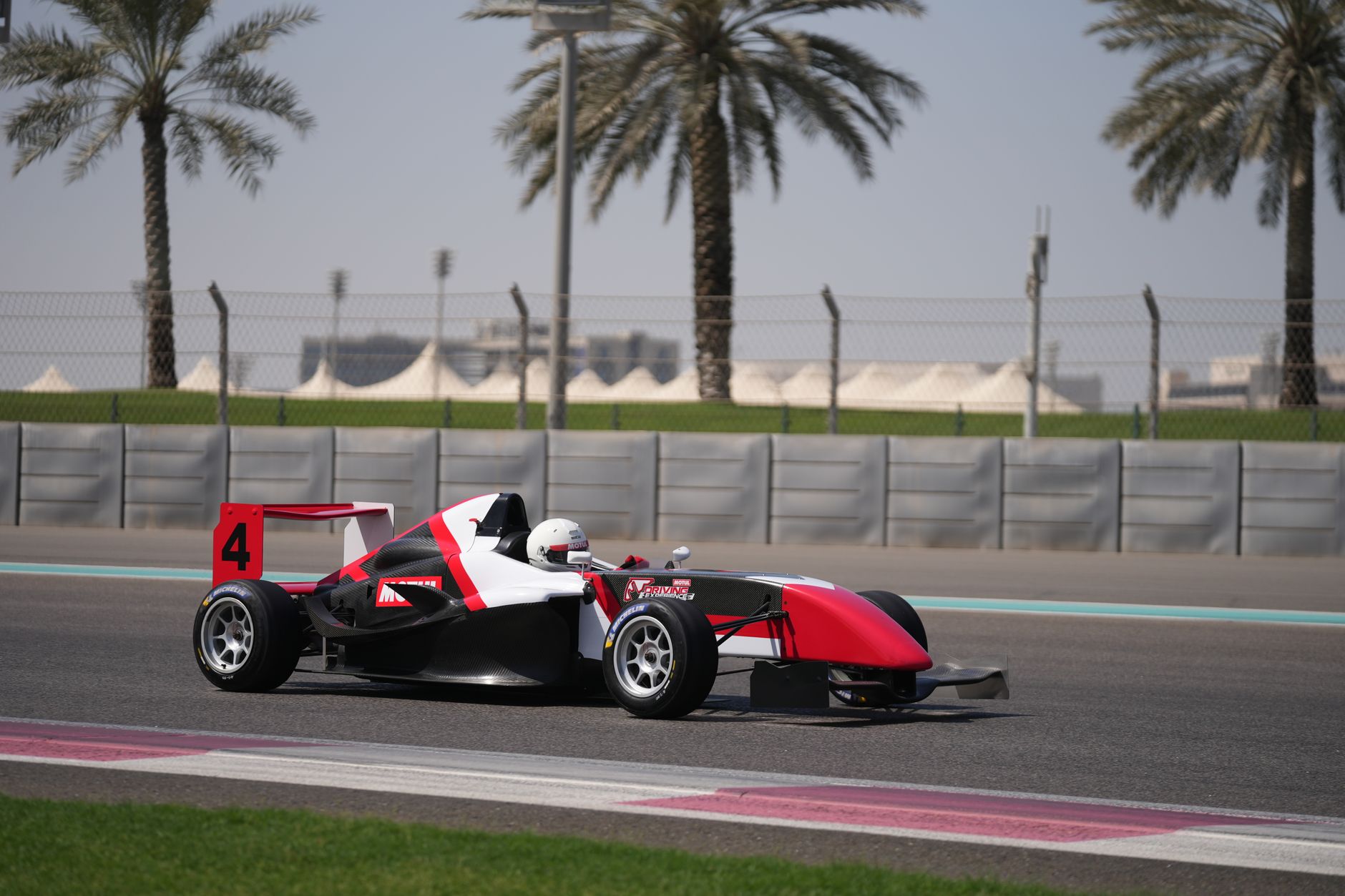
Kean Nakamura-Berta put himself on pole for Race 2 at Zandvoort after leading the second FIA Formula Regional European Championship qualifying session on Sunday.
The Prema Racing driver set the overall benchmark in Qualifying 2 with a 1m30.135s lap. That secured his third pole position of the 2026 FREC season and placed him ahead of Race 1 winner Sebastian Wheldon.
Wheldon, racing for MP Motorsport at the Dutch team’s home venue, will start alongside Nakamura-Berta on the front row later on Sunday. Italian driver Emanuele Olivieri ended the session as the leading Rookie contender.
For a junior category weekend, this was a meaningful qualifying result. Zandvoort is short, narrow in places, and difficult to pass around. Track position matters because drivers often lose time in dirty air when they sit behind another car.
That makes pole especially valuable. A clean launch and a settled opening lap can shape the whole race.
Nakamura-Berta’s lap came in Group A, after Wheldon had already topped Group B. The format split the field into two groups, a common approach in junior single-seater racing when traffic can badly affect lap times.
In Group B, Wheldon led with a 1m30.208s. The margin showed how tight the session was. Rashid Al Dhaheri, driving for R-ace GP, finished only 0.069s behind the American.
Al Dhaheri’s team-mate Zhenrui Chi was third in that group. ART Grand Prix driver Alexandre Munoz followed in fourth, with MP Motorsport’s Alexander Abkhazava completing the top five.
The whole Group B field stayed tightly packed. All 15 participating drivers were covered by less than one second. In a category built around driver development, that sort of spread puts a premium on small details.
A missed apex, an untidy exit, or one slower car ahead can cost several places. Zandvoort makes that even harsher because the lap is compact and traffic arrives quickly.
Once Group A began, the pressure shifted to Nakamura-Berta. The reigning Italian F4 champion needed to beat Wheldon’s time to claim pole outright, and he delivered by 0.073s.
That gap was not comfortable by racing standards. It was enough, though, and enough is all that matters in qualifying.
Dutch driver Reno Francot almost made it even tighter. The CL Motorsport driver improved late and finished second in Group A, just 0.044s away from Nakamura-Berta’s pace.
Olivieri was third in Group A and best of the Rookie runners. Prema’s Tomass Stolcermanis took fourth, while Dion Gowda placed fifth for Van Amersfoort Racing, another Dutch outfit with local interest at Zandvoort.
Nakamura-Berta’s performance adds to an increasingly strong profile. Moving from Formula 4 into Formula Regional is a serious step. The cars carry more speed, more aerodynamic load, and demand greater tyre discipline across a lap.
At Zandvoort, that learning curve becomes sharper. The circuit rewards confidence through fast direction changes, but punishes overdriving. Drivers need to attack the banking and flowing corners without sliding the tyres beyond their working range.
Nakamura-Berta said his pace had been strong throughout the weekend and pointed to clear track as a key factor. That was not just a routine qualifying comment. At Zandvoort, finding space can decide the session before the stopwatch does.
Short laps create constant closing speeds between cars on push laps and preparation laps. If a driver catches traffic at the wrong point, the lap is often gone.
Prema managed that part well enough for Nakamura-Berta to put the lap together. He now has the cleanest starting position available for Race 2.
Wheldon remains a major part of the story. After winning Race 1, he backed it up by topping his qualifying group and securing a front-row start for the second race.
That is the kind of weekend rhythm young drivers want. In junior categories, scouts and teams look beyond single flashes of speed. They want repeatable performance across practice, qualifying, starts, tyre management, and racecraft.
Wheldon’s MP Motorsport seat also adds local flavour. Zandvoort is home ground for the team, and a front-row start gives it another shot at a strong result after Race 1 success.
The start will be crucial. The run to Turn 1 at Zandvoort can invite commitment, but it also narrows quickly. A driver on the outside can lose momentum if the inside car holds firm.
For Nakamura-Berta, the first target is simple. Launch cleanly, defend the inside if needed, and control the pace before the tyres settle.
For Wheldon, the opportunity is just as obvious. He can pressure Nakamura-Berta immediately and force the pole-sitter to defend rather than build rhythm.
Francot will also be worth watching from near the sharp end. A Dutch driver performing well at Zandvoort gives the race another local angle, especially if the front row gets delayed or caught in a fight.
Olivieri’s Rookie benchmark matters too. Rookie classifications are not just side notes in Formula Regional. They help measure how quickly new drivers adapt to faster machinery and more complex race weekends.
The Group B strength behind Wheldon also suggests the field may not stretch out quickly. Al Dhaheri, Chi, Munoz, and Abkhazava all showed enough speed to stay involved if strategy, tyre life, or race interruptions shuffle the order.
There is no pit-stop strategy like Formula 1 here. The key race tools are start execution, tyre care, restart sharpness, and staying out of trouble. Drivers must create opportunities on track, often with limited clean passing chances.
That is why Qualifying 2 may prove decisive before Race 2 even begins.
Nakamura-Berta has the result he needed. Wheldon has momentum from Race 1 and a front-row place. Olivieri has Rookie bragging rights from the session.
Zandvoort now turns the stopwatch into pressure. The fastest lap has already been done. The harder job comes when 30-plus racing laps, traffic, and race starts enter the picture.